5 Composites Startups at JEC 2026 That Could Change Manufacturing Forever
From Nature-Inspired Fiber Placement to Shape-Shifting Molds — The JEC Startup Booster Class of 2026 Is Rewriting the Rules of Composites Manufacturing
Introduction
Every March, the composites industry gathers in Paris for JEC World — and every March, the most interesting conversations happen not in the conference halls of established aerospace primes, but in the Startup Village, where founders with prototypes and conviction pitch technologies that the rest of the industry has not yet imagined.
The JEC Composites Startup Booster is the largest startup competition in the composites world. Since its launch in 2017, it has screened over 1,300 innovative projects from more than 60 countries, selected 158 finalists, and crowned 34 winners [1]. Its alumni roster reads like a who's-who of composites disruption: FibreCoat, Continuous Composites, CompPair, Fortify, Vartega — companies that have gone on to raise tens of millions in venture funding, partner with Lockheed Martin and BMW, and fundamentally change how composite parts are made, repaired, and recycled.
The 2026 class may be the strongest yet. Twenty finalists were selected from over 160 global applicants [2]. They will pitch live on March 10 at the Agora Stage in Hall 6, competing for the Grand Winner (€5,000), Runner-Up (€2,500), and Sustainability Winner (€2,500) prizes — along with a booth at JEC World 2027, media coverage, and direct access to investors on JEC Investor Day [1].
We have been studying the 2026 finalists for weeks. Here are the six that stopped us in our tracks — not because they are the biggest or the best-funded, but because each one attacks a fundamental constraint in composites manufacturing that the established players have accepted as a given.
The JEC Startup Booster — The Composites Industry's Premier Launchpad
Before diving into individual startups, it is worth understanding what makes the Startup Booster special. This is not a generic tech accelerator. It is the only global competition focused exclusively on composites and advanced materials innovation — and its track record of picking winners is remarkable.
By the Numbers
| Metric | Value |
|---|---|
| Founded | 2017 |
| Regions | Europe, USA, Asia |
| Total Projects Screened | 1,300+ |
| Countries Represented | 60+ |
| Total Finalists (all editions) | 158 |
| Total Winners (all editions) | 34 |
| 2026 Applicants | 160+ |
| 2026 Finalists | 20 |
| 2026 Prize Categories | 3 (Grand Winner, Runner-Up, Sustainability) |
Table 1: JEC Startup Booster program statistics [1][2].
2026 Innovation Fields
The 2026 competition organized finalists across five fields of innovation [1]:
Raw Materials
Fibers, resins, additives, fillers, coatings
Semi-finished Materials
Prepreg, textiles, UD tape
Manufacturing Process or Equipment
New ways to make parts
Digital
Material informatics, software, data, AI
Circularity and Recycling Solutions
End-of-life recovery
2026 Schedule
| Event | Date & Time | Location |
|---|---|---|
| Pitch Session 1 | March 10, 10:00–11:25 AM | Agora Stage, Hall 6 |
| Pitch Session 2 | March 10, 4:30–6:00 PM | Agora Stage, Hall 6 |
| Awards Ceremony | March 11, 5:30–6:00 PM | Agora Stage, Hall 6 |
Table 2: JEC Startup Booster 2026 pitch and awards schedule [1].
The jury includes Jelle Bloemhof (Head of Composite Manufacturing Technologies, Airbus), Dr. Chris Skinner (VP Strategic Marketing & R&D, Owens Corning), Aline Rotzetter (Emerald Technology Ventures), Mike Salciccioli (ExxonMobil/Proxxima), and Uday Vaidya (CTO, IACMI) [1]. When Airbus's head of composite manufacturing is personally evaluating your startup, you know the stakes are real.
The Alumni Effect: What Past Winners Have Achieved
The Startup Booster is not just a pitch competition — it is a launchpad. The trajectory of past winners demonstrates why winning (or even being a finalist) at JEC matters.
FibreCoat (Germany)
Spun out of RWTH Aachen University, FibreCoat developed a continuous process for coating basalt fibers with aluminum at industrial speed, creating lightweight EMI shielding materials at one-tenth the cost of alternatives [3]. Since winning, FibreCoat has raised several million euros in venture funding, scaled from lab to production lines in Aachen, and engaged with automotive OEMs for EV shielding applications. By 2024, the team had grown to an estimated 20–40 employees. At JEC 2025, FibreCoat presented PolyCoat — polymer-coated continuous fibers enabling embedded sensors in composite structures [4].
Continuous Composites (USA)
The Coeur d'Alene, Idaho company developed CF3D — continuous fiber 3D printing with in-situ curing that eliminates molds and autoclaves [5]. Post-JEC, they raised over $25 million in venture capital, secured a partnership with Lockheed Martin for defense composite components, won Department of Defense contracts, and grew to approximately 50–70 employees. CF3D is now producing qualified parts for aerospace and defense applications.
CompPair (Switzerland)
This EPFL spinoff commercialized HealTech — self-healing thermoset resins that allow composite parts to recover from impact damage through controlled heating [6]. CompPair has secured funding from Swiss deep-tech investors and Innosuisse, launched applications in ski manufacturing (where impact damage is endemic), and published peer-reviewed data showing >80% mechanical property recovery across multiple healing cycles.
Fortify (USA)
Boston-based Fortify developed the FLUX platform — DLP 3D printing with magnetically aligned fiber reinforcement [7]. They raised approximately $25–30 million across multiple rounds (investors include Accel Partners), grew to 50–80 employees, and commercialized FLUX series printers for tooling and end-use parts in aerospace and defense.
Vartega (USA)
Vartega developed a solvent-based chemical recycling process for carbon fiber composites that preserves fiber length and surface chemistry far better than pyrolysis [8]. They established a pilot facility in Golden, Colorado, and secured partnerships with aerospace manufacturers processing CFRP offcut waste.
The pattern is clear: JEC Startup Booster winners attract funding, land industrial partnerships, and scale. The 2026 finalists are aiming for the same trajectory.
All 20 Finalists at a Glance
Before spotlighting the six most disruptive, here is the complete 2026 class:
| # | Company | Innovation Field | Technology Focus |
|---|---|---|---|
| 1 | RHEOCHONOS | Digital | Real-time composite and resin curing measurement |
| 2 | SINTEG Systems | Digital / Inspection | Advanced structural integrity inspection |
| 3 | CGreen | Raw Materials | Bio-based carbon fiber from recycled cellulose |
| 4 | Blendcel | Raw Materials / Recycling | Plant-based textile waste conversion |
| 5 | Fibionic | Manufacturing Process | Nature-inspired Fibionic Fiber Placement (FFP) |
| 6 | Novium | Digital / AI | Generative AI platform for industrial R&D |
| 7 | ACUS SRL | Manufacturing / Additive | Hybrid adaptive additive manufacturing system |
| 8 | Akhet Solutions | Digital / AI-Physics | Hybrid AI-physics for liquid composites molding |
| 9 | Mach Electric | Raw Materials | Structural carbon fiber produced from CO₂ |
| 10 | Soarce | Raw Materials | Nanofibers stronger than steel |
| 11 | Mars Materials | Raw Materials | Carbon-to-composite precursor transformation |
| 12 | Plastalyst (AC Biode) | Circularity / Recycling | Low-temperature recycling via catalytic hydrolysis |
| 13 | BIOFIBIX | Raw Materials / Natural | Quality flax fiber at affordable pricing |
| 14 | ReForm Composites | Manufacturing | Scalable thermoplastic composites pultrusion |
| 15 | FYOUS | Manufacturing / Tooling | Shape-shifting molds for mass customization |
| 16 | ZETAMOTION | Digital / AI | AI-based composite inspection solutions |
| 17 | P2M | Digital / Traceability | Digital DNA of composite products (GENE.SYS) |
| 18 | Trimer Technologies | Raw Materials | Novel thermoset polymer chemistries |
| 19 | Nebumind | Digital / Analytics | Production data analytics platform |
| 20 | ATA Mute | End-Use Application | Acoustic solutions for noise reduction |
Table 3: All 20 JEC Startup Booster 2026 finalists [1][2].
What stands out immediately: six of the twenty finalists are in the digital/AI/software category. The composites industry — long dominated by materials science and mechanical engineering — is undergoing a digital transformation that is now spawning its own startup ecosystem. The raw materials category is equally strong, with seven companies proposing alternatives to conventional fibers and resins.
Now, the six that we believe could change manufacturing forever.
Startup #1 — Fibionic: The World's Fastest Fiber Placement
The Problem
Traditional automated fiber placement is precise and powerful — but it is fundamentally a serial process. An AFP head lays one tow or tape at a time, building up a laminate course by course. For aerospace structures where every ply matters, this is the right trade-off. But for high-volume automotive, consumer goods, and industrial applications where cycle times must be measured in minutes rather than hours, conventional AFP cannot compete with metal stamping or injection molding on speed.
The Solution
Fibionic's founders — Johannes Mandler, Thomas Rettenwander, and Elias Hirschbichler (who joined as co-founder in 2024) — took inspiration from nature. Biological load-bearing structures like bones and wood grain do not place fibers sequentially; they grow them simultaneously along stress paths. Fibionic's proprietary FFP (Fibionic Fiber Placement) process uses an airstream fiber deposition method that builds entire fiber layers in milliseconds — not seconds or minutes, but milliseconds [9][10].
The result is a reinforcement preform — a "skeleton" of fibers placed precisely along load paths — that can then be overmolded via injection molding, compression molding, or other conventional processes. Because fibers are placed only where structurally needed, the process produces zero fiber waste.
The Numbers
| Parameter | Fibionic FFP | Conventional AFP |
|---|---|---|
| Deposition Speed | Entire layer in milliseconds | ~0.5–1.0 m/s per tow |
| Cycle Time Per Part | ~1 minute | Minutes to hours |
| Annual Capacity (single machine) | Up to 500,000 parts | 1,000–50,000 parts (typical) |
| Material Waste | Zero (fiber only where needed) | 5–15% (trimming, overlaps) |
| Weight Savings vs. Isotropic Design | 30–60% | 20–40% |
| Material Savings | 20–40% | Moderate (near-net-shape) |
| Compatible Fibers | Carbon, glass, natural | Carbon, glass |
| Compatible Matrices | PA6, PA11, PA12, PP, PET | Epoxy, PEEK, PPS, PA |
Table 4: Fibionic FFP vs. conventional AFP comparison [9][10].
The first fully automated production machine is now operational in Innsbruck, and it uses commingled yarns — hybrid yarns where reinforcing fibers (carbon, glass, or natural fibers) are intimately blended with thermoplastic matrix fibers (PA6, PA11, PA12, PP, or PET). When the preform is subsequently heated and pressed, the thermoplastic fibers melt and consolidate around the reinforcing fibers.
Why This Matters
Fibionic is not competing with AFP for aerospace structures. It is competing with metal stamping and injection molding for high-volume structural parts. The 500,000-parts-per-year capacity per machine places FFP squarely in automotive production territory. If the technology delivers on its promises at scale, it could open composites to markets where cycle time has always been the disqualifier.
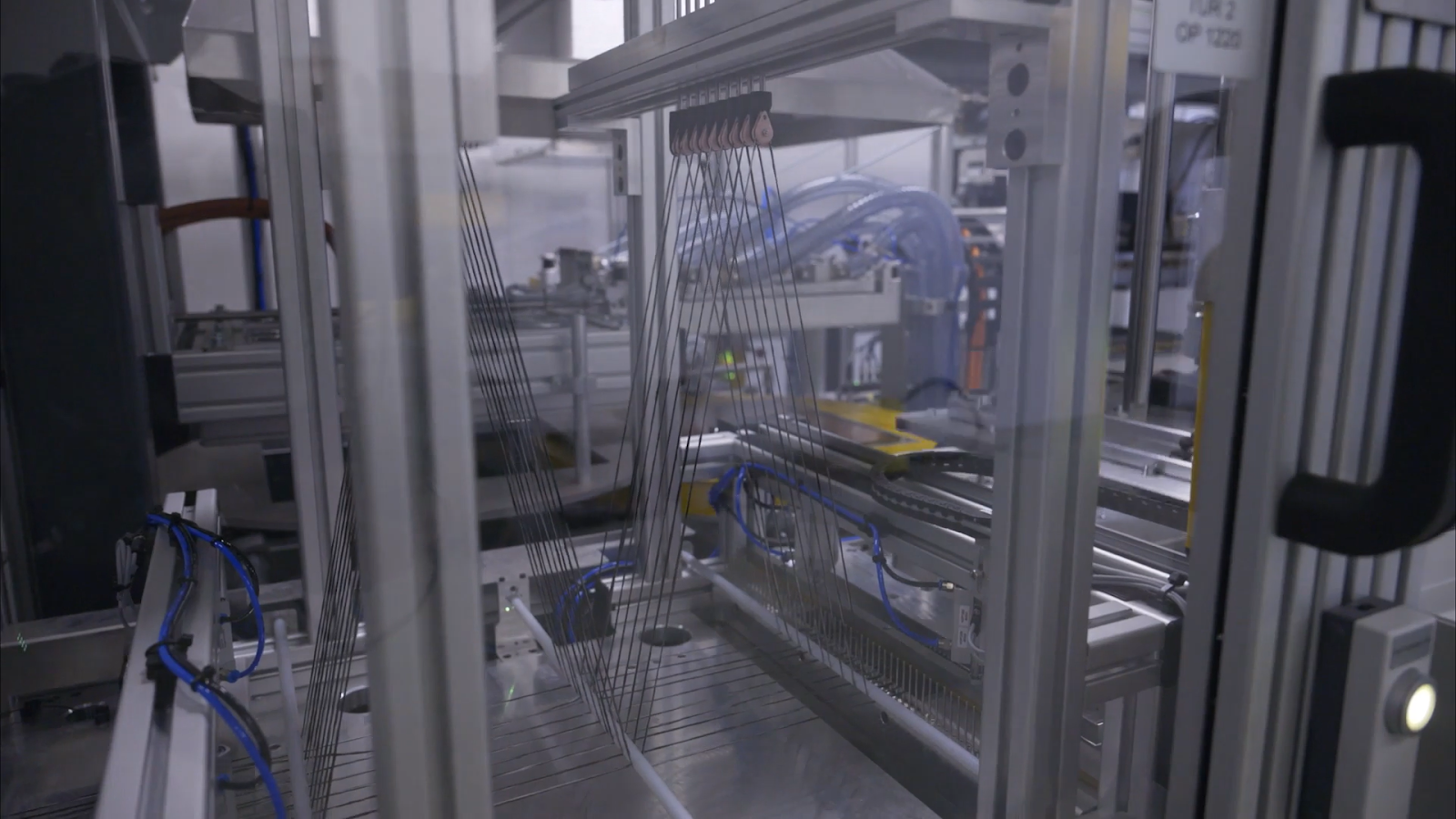
Figure 1: Fibionic FFP Process Schematic
Airstream fiber deposition creating load-path-optimized reinforcement preforms, followed by overmolding via injection or compression molding.
Source: Fibionic [9][10]
Fibionic Hybrid Process: Airstream Deposition → Overmolding
Startup #2 — CGreen: Bio-Based Carbon Fiber from Recycled Cellulose
The Problem
Carbon fiber is one of the most energy-intensive materials on Earth. Conventional production starts with polyacrylonitrile (PAN) — a fossil-fuel-derived polymer — which is oxidized, carbonized at 1,000–1,500°C, and surface-treated. The process consumes approximately 230–300 MJ/kg and generates a substantial carbon footprint. PAN accounts for roughly 50% of carbon fiber production cost, and over 90% of global PAN precursor capacity is concentrated in Japan, the United States, and China [11].
For an industry that sells its products on the promise of lightweighting for sustainability, the carbon footprint of carbon fiber itself is an uncomfortable contradiction.
The Solution
CGreen replaces fossil PAN with cellulose sourced from recycled paper and recycled cotton [12][13]. The company is the product of ten years of R&D conducted within the FORCE project, led by IRT Jules Verne and supported by Forvia (formerly Faurecia). The proprietary spinning and carbonization processes are designed to produce carbon fibers with mechanical properties competitive with standard-modulus PAN-based fibers while cutting the CO₂ footprint by a factor of three [12].
Milestones and Backing
- €2 million raised in initial funding [13]
- Pilot carbonization line to be deployed at Icam (Carquefou, France) — a long-standing partner in the FORCE project [13]
- Selected by Dassault Systèmes' 3DEXPERIENCE Lab for industrial startup acceleration [12]
- Industrial validation of fiber properties targeted by 2027 [2]
The Significance
| Factor | Conventional PAN-Based CF | CGreen Bio-Based CF |
|---|---|---|
| Precursor | Fossil-derived PAN | Recycled cellulose (paper/cotton) |
| CO₂ Footprint | Baseline (1×) | ~3× reduction |
| European Feedstock Availability | Dependent on imports (Japan, US, China) | Abundant domestic supply |
| Strategic Sovereignty | Low (concentrated supply chain) | High (localized production) |
| Mechanical Properties | Standard modulus: 230–240 GPa | Targeting equivalent performance |
| Estimated TRL | N/A (established) | ~4–5 (pilot stage) |
Table 5: Conventional vs. CGreen bio-based carbon fiber comparison [12][13].
CGreen is not the first to explore cellulose-based carbon fiber — the concept dates to Edison's carbonized bamboo lamp filaments. But previous cellulose-based fibers suffered from inferior tensile strength compared to PAN. What makes CGreen credible is the decade of systematic R&D behind it, the backing of IRT Jules Verne (France's premier advanced manufacturing research institute), and the use of recycled rather than virgin cellulose.
Supply Chain Impact
If CGreen succeeds, it does not just produce greener carbon fiber — it fundamentally reshapes the supply chain geopolitics of the composites industry by enabling European production sovereignty.
Figure 2: Carbon Fiber Precursor Pathways
Comparison of conventional PAN-based and CGreen cellulose-based carbon fiber production routes.
Source: CGreen [12][13]
Carbon Fiber Precursor Pathway: Conventional vs. CGreen
Startup #3 — Fyous: The Shape-Shifting Mold
The Problem
Tooling is the composites industry's dirty secret. For every unique composite part geometry, a dedicated mold must be designed, machined (typically from Invar, steel, or aluminum), validated, and maintained. Tooling costs represent 30–60% of total composite part cost for low-to-medium volume production. Lead times for aerospace-quality tools run 8–16 weeks. And when a design iteration changes the part geometry by even a few millimeters, the tool often needs to be remade.
This is the single biggest reason composites cannot compete with metals for low-volume, high-mix production: the economics only work when the tooling cost is amortized over thousands of identical parts.
The Solution
Fyous has built what they call PolyMorphic Moulding — a mold made of more than 28,000 densely packed, individually addressable pins that can be digitally reconfigured into any freeform surface [14][15][16]. A flexible interpolation membrane sits over the pin array to create a smooth mold surface. The entire system reconfigures in under 20 minutes.
One mold. Infinite geometries. Zero tooling waste.
The Performance
| Parameter | Traditional Tooling | Fyous PolyMorphic Moulding |
|---|---|---|
| Reconfiguration Time | 8–16 weeks (new tool) | Under 20 minutes |
| Tooling Waste | Material removed from billet | Zero |
| Cost Per Geometry | $10K–$500K+ (material + machining) | Near-zero marginal cost |
| Speed vs. 3D Printed Tooling | N/A | 14× faster [14] |
| Compatible Processes | Single geometry | Molding, casting, vacuum forming, composite layup |
| Pin Count | N/A | 28,000+ |
| Reusability | Fixed geometry | Infinite reconfiguration |
Table 6: Traditional tooling vs. Fyous PolyMorphic Moulding comparison [14][15][16].
The first commercial system, the PM-01, supports molding, casting, vacuum forming, and composite layup processes [15]. Fyous is targeting applications across footwear, orthotics, medical devices, aerospace prototyping, and architectural panels.
Why This Matters for Composites
The implications for composite manufacturing are profound. Consider the aerospace MRO (maintenance, repair, overhaul) sector: every composite repair patch requires a caul plate or mold matched to the damaged area's geometry. Today, these are either machined (expensive, slow) or approximated (compromising repair quality). A PolyMorphic mold could be digitally configured to match the exact repair geometry in minutes.
For R&D and prototyping, the calculus changes entirely. Instead of committing $50K to a tool before validating a design, engineers can iterate through dozens of geometries on the same machine in a single day.
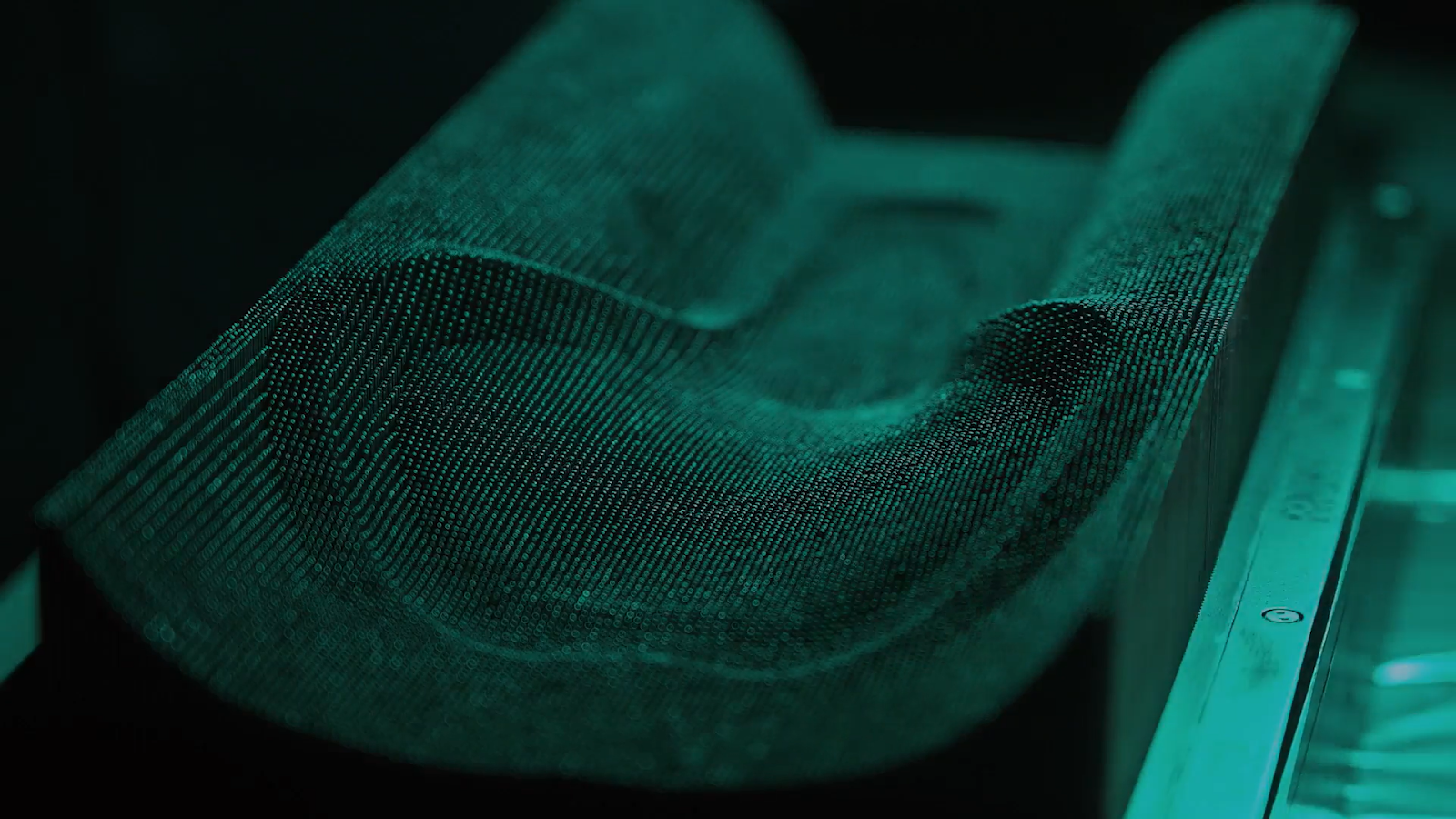
Figure 3: PolyMorphic Moulding Concept
Fyous pin-based reconfigurable mold system showing digital control, pin array, and flexible membrane.
Source: Fyous [14][15][16]
Fyous Reconfigurable Mold Technology
Startup #4 — Novium: Generative AI for Composites R&D
The Problem
Composites R&D is painfully slow. Qualifying a new material system for aerospace can take 5–10 years and millions of dollars. The industry generates enormous volumes of test data — coupon-level mechanical properties, process parameters, failure modes, environmental aging — but this knowledge is fragmented across PDF reports, proprietary databases, tribal expertise, and decades of published literature. When an engineer needs to know whether a specific resin system has been tested at a specific temperature with a specific fiber architecture, the answer is usually buried somewhere — but finding it requires hours of manual searching.
The result is a chronic cycle of reinvention. Teams unknowingly repeat experiments, miss relevant prior art, and default to conservative designs because the cost of exploring alternatives is too high.
The Solution
Novium is building a generative AI platform that transforms fragmented knowledge into structured intelligence [17][18]. The platform enables R&D teams to explore possibilities, anticipate outcomes, and make confident decisions before committing to physical testing.
While specific technical architecture details are limited at this stage, the value proposition targets the core bottleneck: converting the composites industry's vast but disorganized knowledge base into an actionable decision-support system. This means not just search (finding relevant data) but synthesis (connecting data points across sources to generate insights) and generation (proposing experimental designs, material combinations, or process parameters that optimize for multiple objectives simultaneously).
The Context
Novium is riding a wave of AI adoption in materials science. Companies like Materials Zone, Citrine Informatics, and Uncountable have demonstrated that machine learning can accelerate materials development cycles by 2–5× in adjacent industries (polymers, alloys, coatings). But composites present unique challenges: the design space is enormous (fiber type × resin × architecture × process × environment), the data is highly heterogeneous, and the physics of failure is anisotropic and scale-dependent.
A generative AI platform purpose-built for composites — rather than adapted from metals or pharmaceuticals — could unlock significant R&D productivity gains across the industry.
Why This Matters
The composites industry's competitive battleground is shifting from materials to data. The companies that can qualify new material systems fastest, optimize processes with fewer physical trials, and extract insights from their accumulated test data will win. Novium's bet is that AI is the lever.
Startup #5 — P2M / GENE.SYS: The Digital DNA of Composite Products
The Problem
A composite part has no memory. Once it leaves the factory floor, its manufacturing history — cure cycle parameters, layup sequence, resin batch, fiber lot, operator, ambient conditions — exists only in paper travelers or disconnected databases. During its service life, maintenance events, repairs, and loading history are tracked (if at all) in separate systems. At end of life, a recycler picking up a composite panel cannot tell what resin system it contains, what fiber type, or whether it has been contaminated — making intelligent recycling impossible.
This information asymmetry is about to become a regulatory problem. The EU's Ecodesign for Sustainable Products Regulation (ESPR) is mandating Digital Product Passports (DPPs) for a growing list of product categories. Composites — complex multi-material structures with long service lives and significant end-of-life challenges — are exactly the kind of products that DPPs are designed for.
The Solution
P2M's GENE.SYS system embeds a chip directly into the composite part during manufacturing, creating what the company calls the "digital DNA" of the product [19][20]. This chip carries a unique identifier linked to a cloud database that tracks the part across its entire lifecycle:
Manufacturing
Process parameters, material traceability, quality data
In-Service
Maintenance events, repairs, loading history, SHM data
End-of-Life
Material composition, recycling instructions, contamination status
The technology is already being deployed commercially. Italia Yachts has become the first shipyard to integrate GENE.SYS, using it to track composite yacht components from production through maintenance [20].
Why This Matters
GENE.SYS sits at the intersection of three converging forces:
Regulatory pull: EU DPP requirements are creating mandatory demand for lifecycle tracking
Circularity need: Intelligent recycling of composites requires knowing what materials are in a part
MRO value: Digital maintenance records reduce inspection costs and improve safety
Automated manufacturing: Every AFP-laid part could carry a complete digital record of its manufacturing provenance permanently embedded within the structure itself
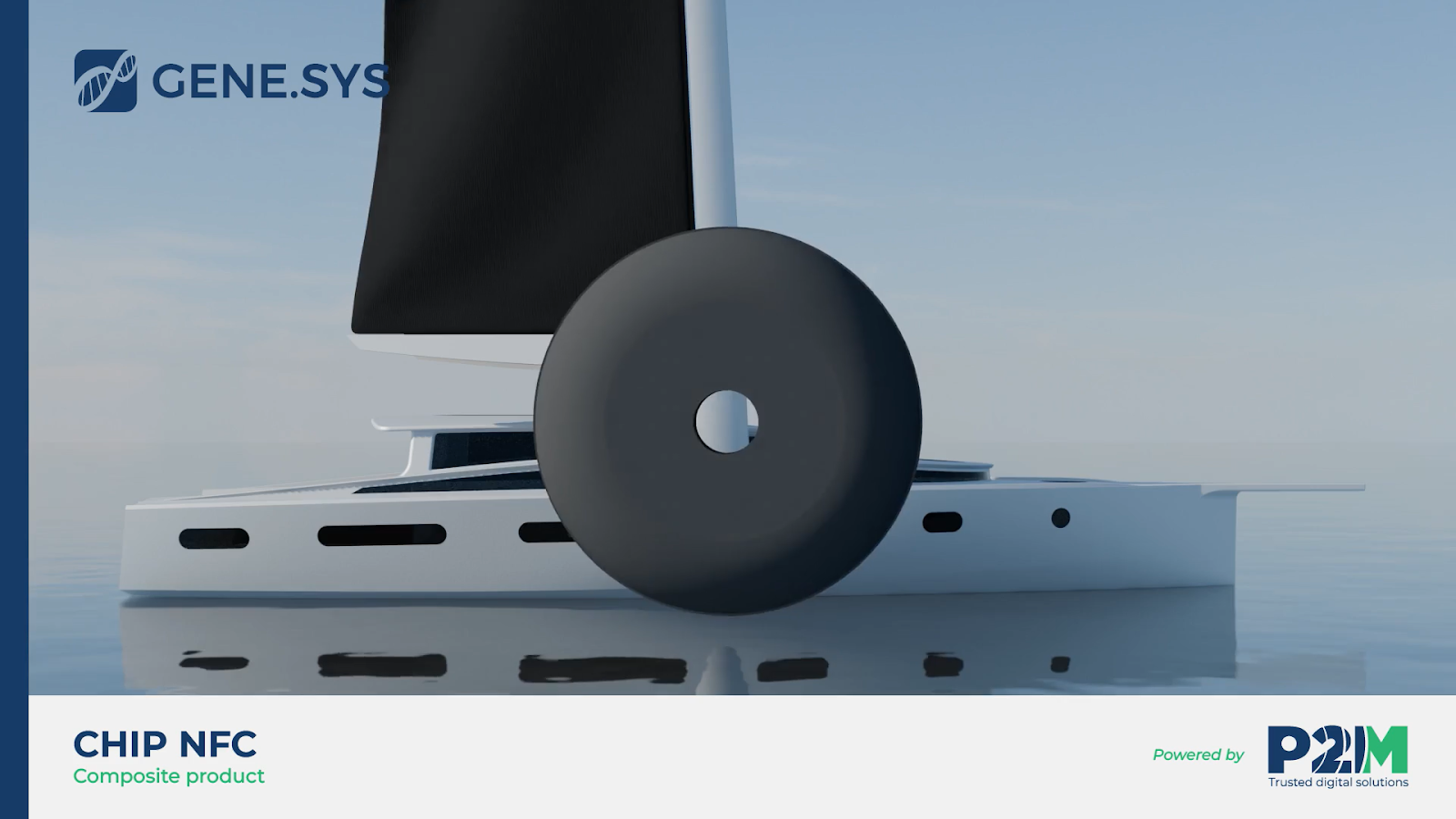
Figure 4: GENE.SYS Lifecycle Tracking
Composite part lifecycle with embedded GENE.SYS chip tracking from manufacture to end-of-life.
Source: P2M [19][20]
GENE.SYS: Full Lifecycle Digital Twin
Startup #6 — Plastalyst (AC Biode): Recycling the "Unrecyclable" at Low Temperature
The Problem
Thermoset composites are, by chemistry, permanent. Epoxy, polyester, and vinyl ester resins cure through irreversible cross-linking — once set, they cannot be melted, reshaped, or dissolved under normal conditions. This makes thermoset composites functionally unrecyclable by conventional means.
Current recycling options are limited:
- Mechanical grinding: Produces low-value filler material with destroyed fiber properties
- Pyrolysis (500–700°C): Burns away the resin but degrades fiber properties by 30–50%, and is energy-intensive
- Conventional solvolysis: Uses harsh solvents at elevated temperatures and pressures
With approximately 30,000 tonnes of composite waste generated annually in Europe alone — and the first generation of wind turbine blades and aircraft structures now reaching end of life — the gap between "lightweight for sustainability" and "impossible to recycle" is becoming a reputational and regulatory crisis for the composites industry.
The Solution
Plastalyst is a catalytic hydrolysis process developed by AC Biode that decomposes polymers into their constituent monomers at temperatures at or below 200°C, using only water as a solvent [21][22]. No harsh chemicals. No extreme temperatures. No precious or rare-earth metal catalysts.
The process works on a wide spectrum of polymers — including challenging multilayer and deteriorated plastics that are considered unrecyclable by conventional means. AC Biode has demonstrated the ability to recycle PET back into terephthalic acid (TPA) and methanol — a true monomer-level recycling that enables production of virgin-quality material from waste [21].
The Numbers
| Parameter | Mechanical Recycling | Pyrolysis | Plastalyst Hydrolysis |
|---|---|---|---|
| Temperature | Ambient | 500–700°C | ≤200°C |
| Fiber Property Retention | Destroyed | 50–70% | High (mild conditions) |
| Output Quality | Low-value filler | Degraded fiber + char | Monomers (virgin-quality) |
| Energy Intensity | Low | Very high | Low–moderate |
| Solvent | None | None | Water |
| Polymer Range | Limited | Broad | Broad (incl. multilayer) |
| Current Scale | Industrial | Industrial | 1.2 tonne pilot [21] |
Table 7: Composite recycling method comparison [21][22].
AC Biode is currently testing at 1.2-tonne scale for PET, PVC, PE, PP, and mixed plastics [21]. The extension to thermoset composite waste — epoxy/carbon fiber and polyester/glass fiber — is a natural next step given that the catalytic hydrolysis mechanism can break ester and amide bonds in the cross-linked network.
Why This Matters
If Plastalyst can deliver on its promise for thermoset composites at industrial scale, it resolves the composites industry's deepest sustainability contradiction. The same technology that makes structures lighter and more fuel-efficient would finally have a viable end-of-life pathway. Combined with P2M's GENE.SYS for material identification, you begin to see a complete circular economy infrastructure for composites: manufacture → track → identify → recycle at low temperature → reuse.
The Bigger Picture: Why the Startup Ecosystem Matters
Step back and look at these six companies together, and a pattern emerges:
| Startup | Constraint Attacked | Industry Impact |
|---|---|---|
| Fibionic | Cycle time (too slow for mass production) | Opens composites to automotive volumes |
| CGreen | Precursor sustainability (fossil-dependent) | Decarbonizes the carbon fiber supply chain |
| Fyous | Tooling cost (one mold per geometry) | Eliminates tooling as a cost barrier |
| Novium | R&D speed (trial-and-error qualification) | Accelerates materials development by 2–5× |
| P2M / GENE.SYS | Information loss (no lifecycle tracking) | Enables circular economy + DPP compliance |
| Plastalyst | End-of-life (thermosets are "unrecyclable") | Closes the loop on thermoset composites |
Table 8: Six featured startups and the fundamental constraints they address.
Each startup attacks a different link in the composites value chain, but collectively they describe a future composites industry that is faster, greener, smarter, more flexible, and genuinely circular. This is not incremental improvement — it is structural transformation.
Composites Value Chain: JEC 2026 Startup Booster Finalists
Materials
& R&D
The Democratization Thread
There is a deeper story connecting these startups to each other — and to companies like Addcomposites.
The composites industry was built by and for aerospace primes. The materials were expensive. The equipment was expensive. The qualification was expensive. Everything about composites said: "This technology is for organizations with billion-dollar R&D budgets."
Every one of the six startups profiled here is pushing against that exclusivity:
Fibionic
Makes fiber placement fast enough for mass-market economics
CGreen
Makes carbon fiber from waste paper instead of imported PAN
Fyous
Eliminates the need for dedicated tooling budgets
Novium
Gives smaller teams AI-powered R&D capabilities that used to require vast testing programs
P2M
Brings digital traceability to every part, not just flight-critical components
Plastalyst
Makes recycling viable without industrial pyrolysis furnaces
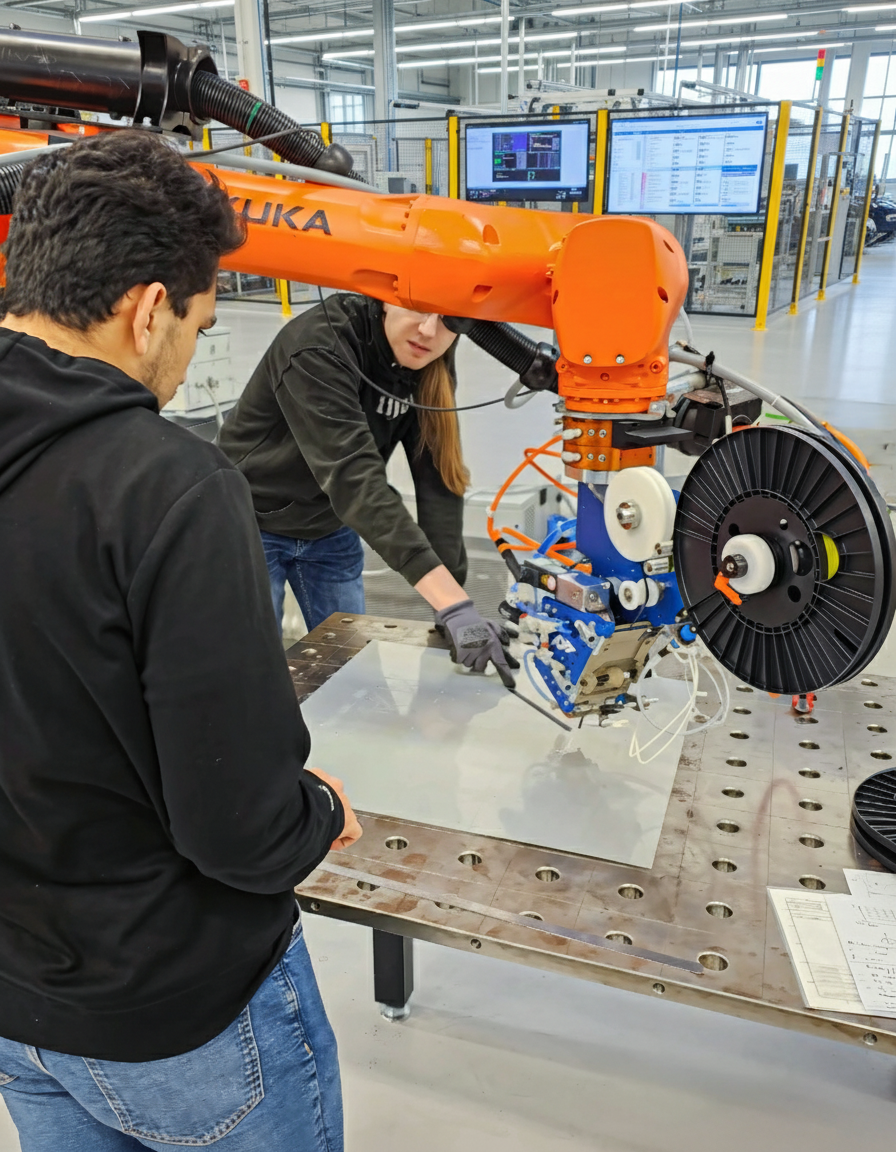
AFP-XS on a KUKA industrial robot — aerospace-grade fiber placement, accessible to any lab or SME with a standard robot arm.
This is the same impulse that drives Addcomposites. When we built the AFP-XS — an automated fiber placement system that mounts on any industrial robot — the thesis was the same: aerospace-grade composite technology should not require aerospace-grade budgets. The technology should be accessible to university labs, SMEs, and Tier 2/3 suppliers that are building the future supply chain.
The JEC Startup Booster class of 2026 is proof that this democratization impulse is not unique to us. It is a movement.
What to Watch on March 10
If you are at JEC World 2026, here is what we recommend:
Be in Hall 6, Agora Stage, at 10:00 AM sharp.
The first pitch session features 10 startups in rapid succession. The energy is different from conference presentations — these are founders, not corporate speakers.
Come back at 4:30 PM for Part 2.
The afternoon session has another 10 finalists.
Walk the Startup Village.
Beyond the Booster finalists, JEC 2026 hosts 60+ startups across the exhibition floor. Some of the most interesting technologies we have encountered were found not on the Agora stage but in 3×3 meter booths, tucked between the established exhibitors.
Attend Investor Day on March 11.
If you are investing in or partnering with composites startups, this is the most concentrated opportunity to meet founders in one-to-one sessions.
Watch the Awards Ceremony, March 11 at 5:30 PM.
Three winners will be announced. Based on past editions, the winner announcement itself is less important than the conversations it sparks.
References
[1] JEC Group, "Startup Booster — JEC World 2026," jec-world.events, 2026. [Online]. Available: https://www.jec-world.events/program/startup-booster
[2] CompositesWorld, "Meet the JEC Group Startup Booster finalists for 2026," compositesworld.com, 2026. [Online]. Available: https://www.compositesworld.com/news/meet-the-jec-group-startup-booster-finalists-for-2026
[3] JEC Group, "Startup Booster Hall of Fame," jeccomposites.com, 2026. [Online]. Available: https://www.jeccomposites.com/startup-booster-hall-of-fame/
[4] CompositesWorld, "JEC World 2025 highlights: New thermoplastics, PI fiber, solutions for FR, machining, digitized processes and more," compositesworld.com, 2025. [Online]. Available: https://www.compositesworld.com/articles/jec-2025-highlights
[5] Continuous Composites, "CF3D Technology," continuouscomposites.com, 2025. [Online]. Available: https://www.continuouscomposites.com
[6] CompPair Technologies, "HealTech — Self-healing composite materials," comppair.ch, 2025. [Online]. Available: https://www.comppair.ch
[7] Fortify, "FLUX — Digital Composite Manufacturing," fortify3d.com, 2025. [Online]. Available: https://www.fortify3d.com
[8] Vartega, "Carbon fiber recycling," vartega.com, 2025. [Online]. Available: https://www.vartega.com
[9] JEC Composites, "'Nature has already solved many of the engineering challenges we face today,' Fibionic co-founders," jeccomposites.com, 2026. [Online]. Available: https://www.jeccomposites.com/news/by-jec/fibionic-co-founders
[10] Fibionic, "Fastest Fiber Placement," fibionic.com, 2026. [Online]. Available: https://www.fibionic.com
[11] Das, S. et al., "The global carbon fiber composites supply chain: An analysis of key economic factors," ORNL/SR-2016/100, Oak Ridge National Laboratory, 2016.
[12] Dassault Systèmes, "CGreen Bio-based Carbon Fiber — 3DEXPERIENCE Lab," 3ds.com, 2025. [Online]. Available: https://www.3ds.com/3dexperiencelab/portfolio/cgreen-bio-based-carbon-fiber
[13] Socomore, "CGREEN raises nearly €2 million to decarbonize carbon fiber manufacturing," socomore.com, 2025. [Online]. Available: https://www.socomore.com/en/blog/news/CGREEN-fundraising
[14] Fyous, "PolyMorphic Manufacturing Systems for Reconfigurable Production," fyous.com, 2026. [Online]. Available: https://www.fyous.com
[15] Fyous, "PM-01 PolyMorphic Moulding Machine," fyous.com, 2026. [Online]. Available: https://www.fyous.com/pm-01
[16] CompositesWorld, "Fyous launches infinitely reusable manufacturing mold tech," compositesworld.com, 2025. [Online]. Available: https://www.compositesworld.com/products/fyous-launches-infinitely-reusable-manufacturing-mold-tech
[17] Novium, "Generative AI for Industrial R&D," novium.rs, 2026. [Online]. Available: https://novium.rs
[18] JEC Group, "Startup Booster 2026 Finalists," jec-world.events, 2026. [Online]. Available: https://www.jec-world.events/startup-booster-finalists-2026
[19] P2M, "GENE.SYS — Digital DNA of Composite Products," 2026. [Based on JEC Startup Booster finalist description].
[20] Italia Yachts, "Italia Yachts towards the future with Gene.Sys by P2M: the digital revolution onboard," italiayachtsinternational.com, 2025. [Online]. Available: https://italiayachtsinternational.com/en/italia-yachts-gene-sys
[21] AC Biode, "Plastalyst," acbiode.com, 2025. [Online]. Available: https://acbiode.com/plastalyst
[22] AC Biode, "Tech4Good Spotlight: Plastalyst," acbiode.com, 2025. [Online]. Available: https://acbiode.com/2025/11/13/tech4good-spotlight-plastalyst
[23] JEC Composites, "JEC World 2026 under the motto 'Pushing the Limits,'" jeccomposites.com, 2025. [Online]. Available: https://www.jeccomposites.com/press/jec-world-2026-pushing-the-limits
Learn More
Interested in exploring composites manufacturing innovation for your operations?
Contact Us for a Consultation