Automotive Composites 2026: From BMW's Flax-Fiber M Cars to Mass-Production EV Battery Housings
How JEC 2026's Two Automotive Innovation Award Winners Signal a Permanent Shift from Prototype to Production
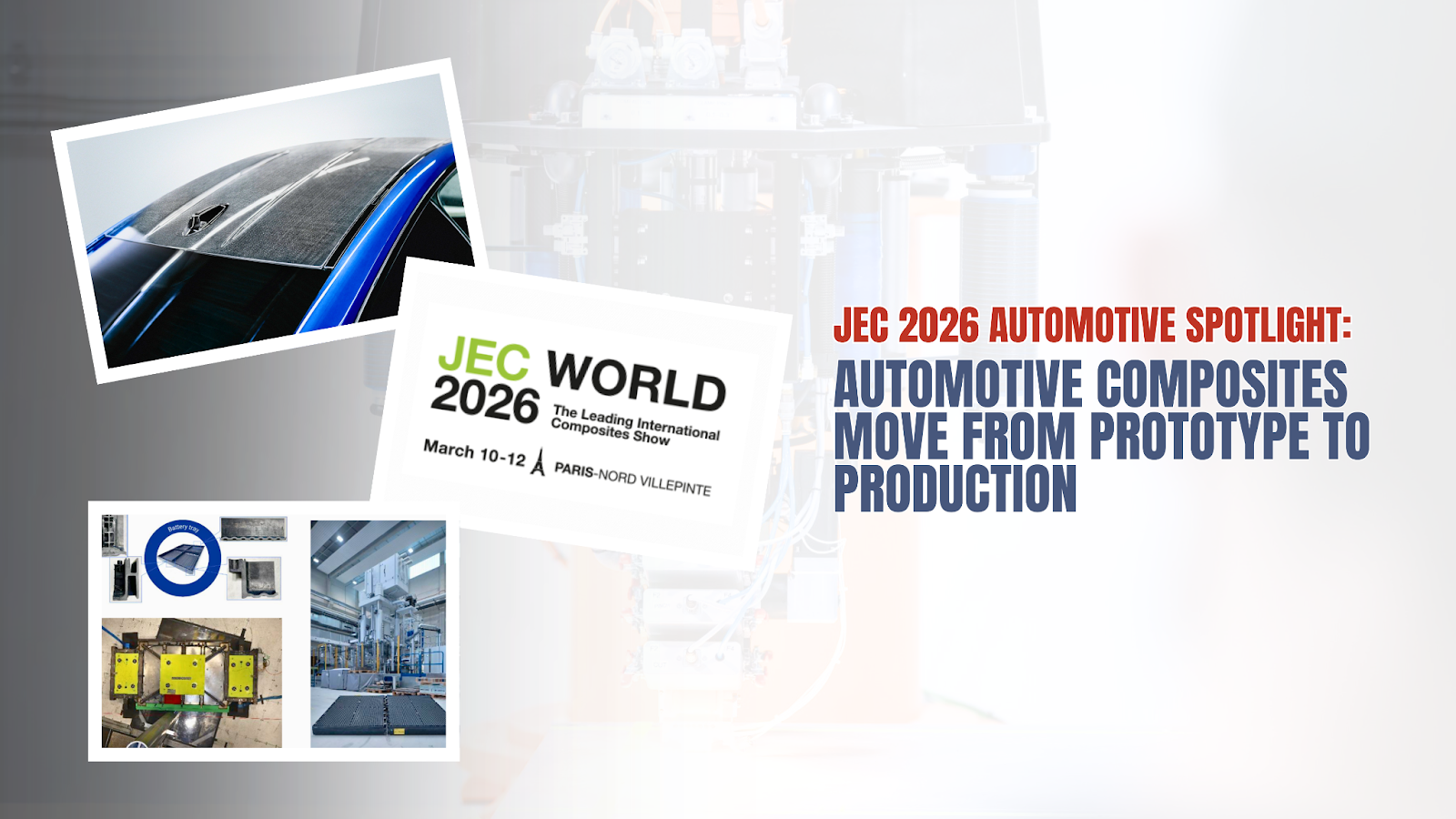
The Automotive Composites Inflection Point
For most of composites history, automotive and aerospace have existed in different universes. Aerospace: small volumes, extreme performance requirements, cost secondary to weight and reliability. Automotive: massive volumes, brutal cost pressure, "good enough" performance at competitive price points. Carbon fiber composites, purpose-built for aerospace economics, struggled to justify their cost in vehicles produced by the millions.
That story is changing — and JEC World 2026 is the clearest evidence yet of where the automotive composites industry now stands.

Source: JEC
The global automotive composites market was valued at approximately $10.06 billion in 2025 and is forecast to grow at a CAGR of 12% to reach $17.72 billion by 2030 [1]. What is driving this growth is not aerospace-style carbon fiber displacement — carbon fiber still accounts for only 0.6% of composites used in automotive applications [2]. What is driving it is a quieter revolution: glass fiber composites (92% of the automotive composites market), natural fiber systems, and hybrid multi-material structures that can actually compete with aluminum and steel on a cost-per-part basis, while delivering the weight, sustainability, and design advantages that battery electric vehicles demand.
Two pressures are converging to accelerate this shift. The first is electrification: BEV platforms impose a weight penalty from the battery pack that creates an urgent lightweighting mandate everywhere else in the vehicle. Every kilogram removed from structure or body adds directly to range — and range is the primary purchase determinant for most new EV buyers. The second is sustainability regulation: EU mandatory Ecodesign requirements, Science Based Targets commitments by leading OEMs, and customer pressure across Tier 1 supply chains are forcing materials selection decisions to incorporate lifecycle carbon, recyclability, and end-of-life options. Traditional thermoset composites perform poorly on both circularity criteria.
The two 2026 Innovation Award winners in the automotive categories embody exactly this dual pressure — and both arrive as production-ready solutions, not laboratory demonstrations.
Global Composites Market Growth
USD Billion — Historical vs. Forecast
Innovation Award Winner: BMW M Natural Fiber Composites
Source: JEC
From Formula E to the Showroom Floor
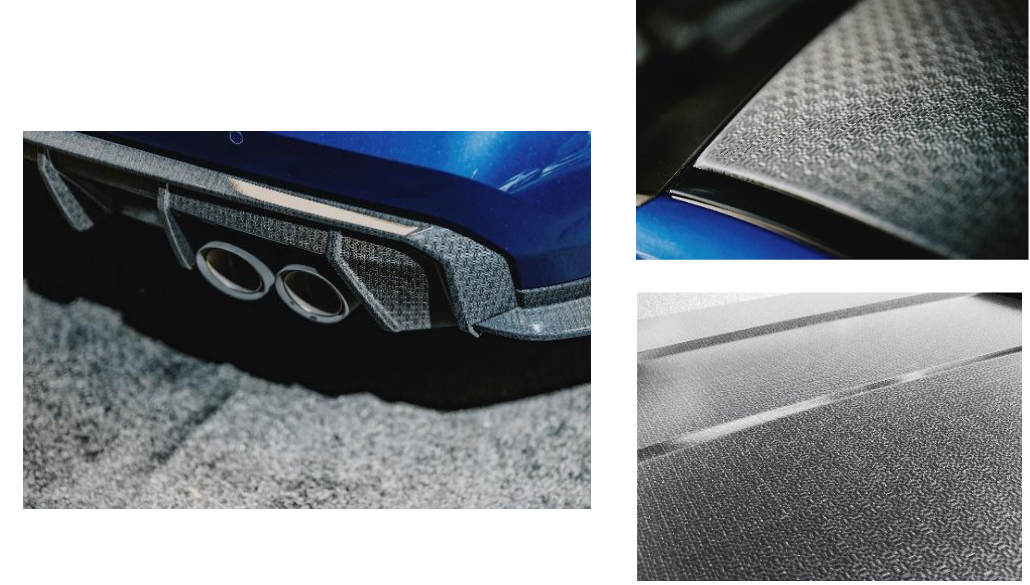
The story of BMW M's flax-fiber composites is one of patient, systematic industrialization — from motorsport proving ground to mass-production certification. It is also the clearest demonstration at JEC 2026 that sustainable materials and production-vehicle performance requirements are no longer mutually exclusive.
Bcomp, the Swiss natural fiber composite specialist, first partnered with BMW M Motorsport in 2019 for the Formula E racing program. That racing application proved the concept: flax fiber composites made using Bcomp's proprietary ampliTex™ and powerRibs™ system could meet the vibrational, thermal, and structural demands of high-performance motorsport environments. The same system appeared in the BMW M4 GT4 race car — a vehicle produced in meaningful commercial volumes and subjected to the scrutiny of real-world racing durability [4].
But racing applications operate under very different quality criteria than series production vehicles. A racing roof panel that shows a slight surface imperfection is acceptable. A BMW M3 roof on a showroom floor that fails a Class A surface finish inspection is a warranty claim and a brand problem. The journey from M4 GT4 to the next-generation M3 production car required solving a challenge that had blocked natural fiber composites from automotive exteriors for years: moisture sensitivity.
The Technical Problem: Moisture and Class A Surfaces
Natural fibers absorb moisture. This is an intrinsic property of cellulose-based materials, and it creates two problems for automotive exterior applications:
- Dimensional instability: Moisture uptake causes fibers to swell, which in a cured composite part translates to dimensional changes that can open microcracks, distort panel geometry, and compromise fit-and-finish.
- Surface quality degradation: Paint adhesion and surface profile ("orange peel" and gloss) depend critically on the stability of the substrate. A surface that changes geometry with seasonal humidity cannot maintain the appearance standards required for premium exterior panels.
Source: BMW
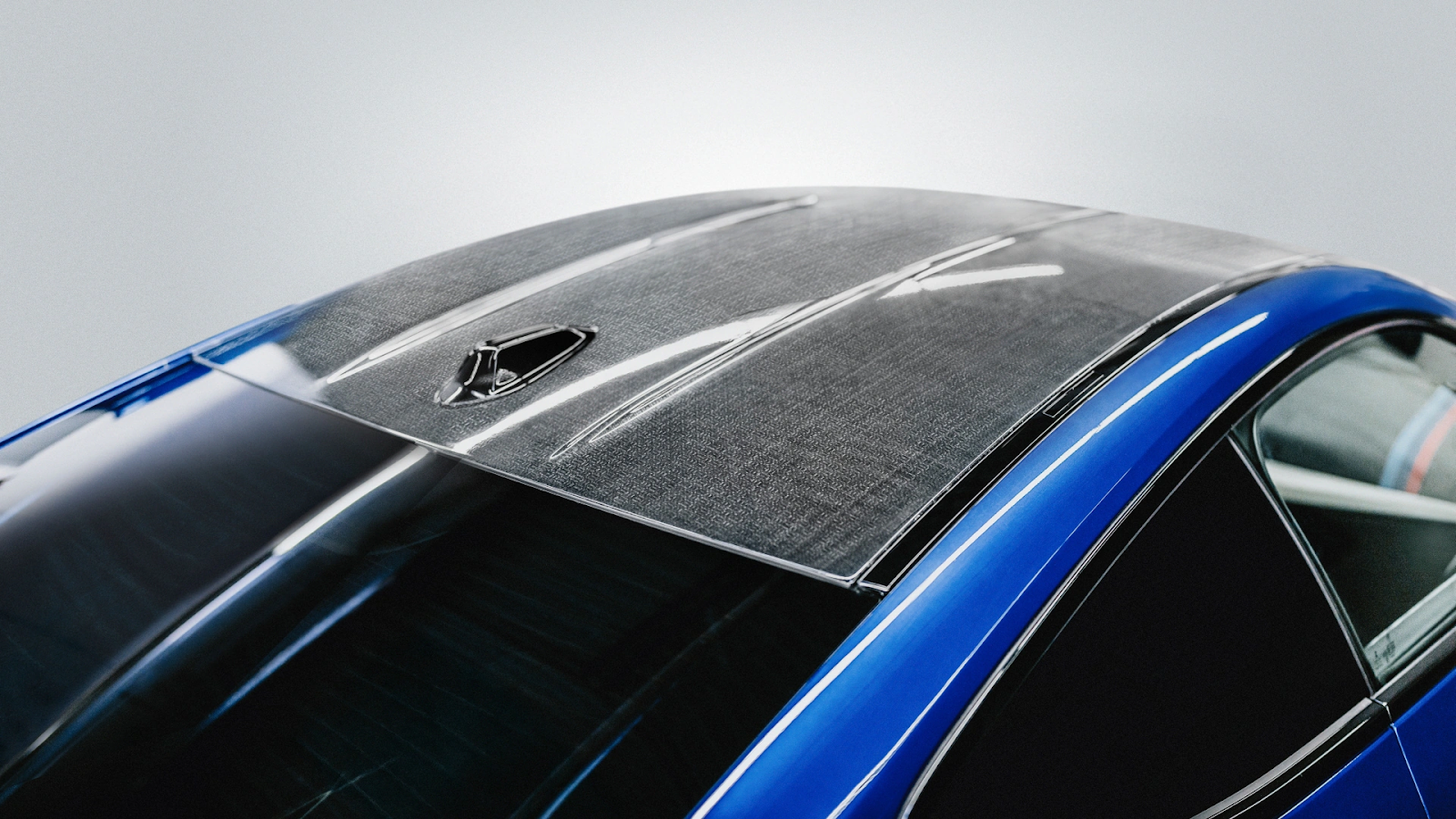
The consortium — BMW Group M, Bcomp, SGL Carbon, Cobra, and PPG Wörwag — developed a new resin and prepreg formulation with SGL Carbon's expertise that provides a moisture barrier at the fiber-matrix interface while preserving the mechanical performance and environmental profile of the flax fiber system. PPG Wörwag contributed the coatings chemistry to validate that the treated natural fiber substrate meets BMW M's Class A painting requirements [5][6].
Natural Fiber Hybrid System
Bio-based composite architecture — JEC Innovation Award 2026
What "Series-Ready" Actually Means
The JEC Innovation Award citation uses the phrase "series-ready" — language that deserves unpacking, because it carries specific technical and commercial meaning in automotive manufacturing.
For a composite component to be considered series-ready in the context of a premium vehicle program like BMW M, the following criteria must typically be demonstrated:
Process Repeatability
The manufacturing process (RTM) must produce parts within dimensional tolerance across the full production run. BMW M's production roof uses a fully automated RTM process ensuring fast and consistent cycle-to-cycle repeatability [5].
Volume Qualification
The supply chain — fiber growing, retting, weaving (Bcomp), prepregging (SGL Carbon), molding (Cobra in Thailand), painting (PPG Wörwag) — must be capable of meeting annual production volumes of BMW M vehicles, produced in the thousands to tens of thousands per year.
Homologation
The natural fiber composite roof structure must meet all relevant automotive safety regulations, including roof crush resistance. Bcomp and BMW have developed a material specification that satisfies total vehicle homologation without structural compromise [6].
Multi-Model Applicability
The announcement explicitly states that natural fiber composites are "available for use in series production of future models" (plural) — meaning the development effort has produced a platform solution, not a one-off application [7].
The next-generation BMW M3 is confirmed as the launch application, with the composite roof replacing an equivalent CFRP (carbon fiber reinforced polymer) component. Replacing CFRP with the Bcomp natural fiber system in the M3 roof delivers approximately 40% reduction in CO2e during production — a meaningful contribution to BMW M's Scope 3 emissions targets, combined with additional end-of-life advantages since bio-based materials offer more favorable composting and chemical recycling pathways than petroleum-derived CFRP [4][6].
Other BMW M interior and exterior applications will use a prepreg process (rather than RTM), supporting design flexibility and the ability to maintain different surface finish options across the model range.
Lifecycle CO₂e Comparison
Relative emissions — CFRP = 100% baseline
Innovation Award Winner: Plastic EV Battery Housing
Source: JEC
The Heaviest Problem in the Lightest Vehicle
The traction battery is the defining component of a battery electric vehicle. It is also, typically, the heaviest. A typical EV battery pack — cells, modules, BMS electronics, thermal management, and structural housing — weighs between 300 and 600 kg depending on energy capacity. The housing alone, which must protect the cells from mechanical intrusion, thermal runaway propagation, moisture ingress, and electromagnetic interference, typically accounts for 110 to 160 kg in metal construction [8].
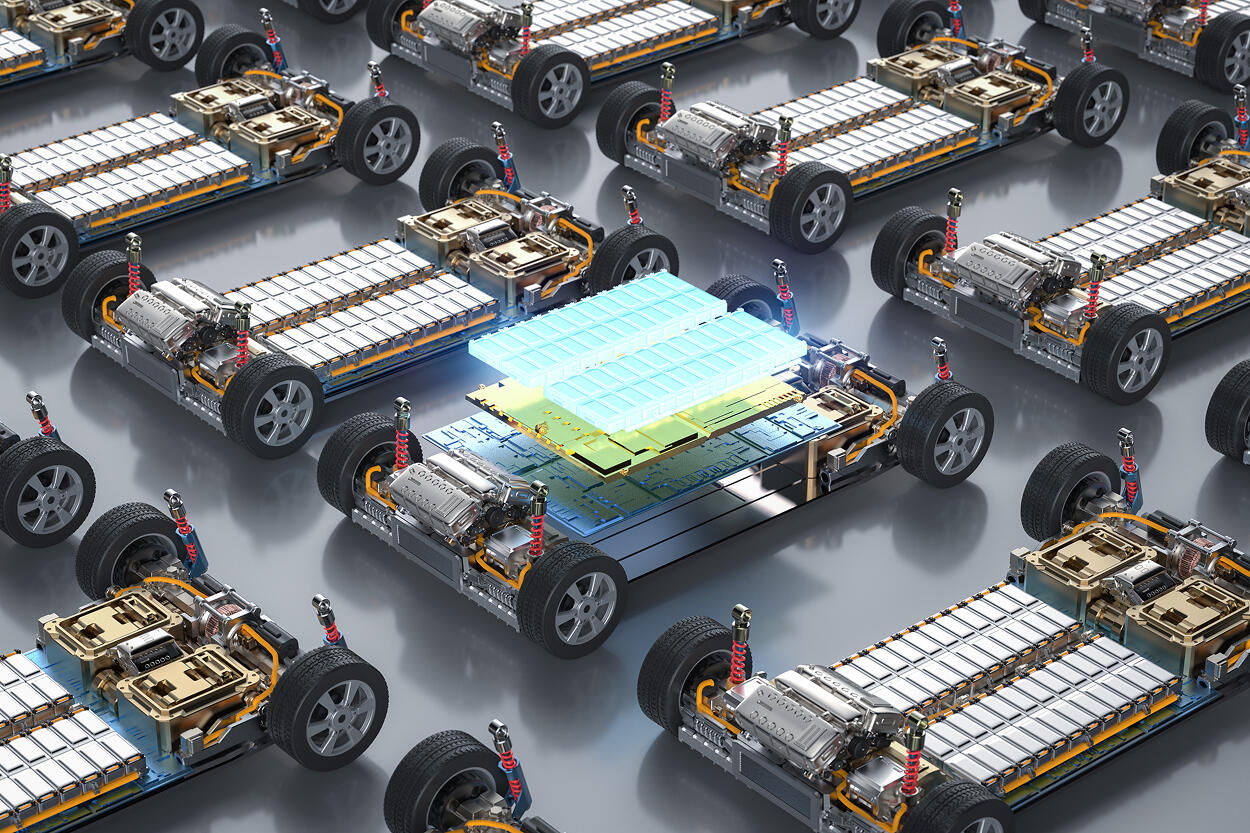
That weight matters profoundly for range. Battery electric vehicles operate under a brutal physics constraint: every kilogram of vehicle mass requires additional battery energy to accelerate and decelerate, which requires additional battery mass to provide that energy. Lightweighting is not just desirable in EVs — it is compounding. A lighter battery housing means a lighter battery, which enables a lighter vehicle overall, which allows a smaller battery to achieve the same range. Industry data indicates that a 10% reduction in vehicle mass can translate to a 5–7% improvement in electric range [9].
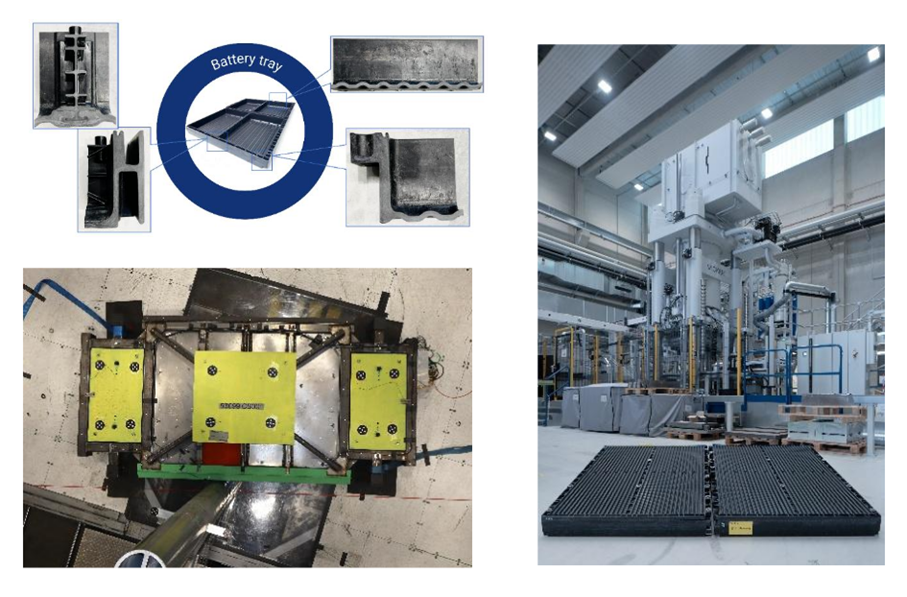
The consortium led by TU Chemnitz and Mahle Filtersysteme has developed a glass fiber-reinforced thermoplastic battery housing using a manufacturing approach specifically designed for automated large-scale compression molding at automotive production volumes.
The Technical Innovation: Fewer SKUs, Simpler Supply Chain
The key insight of the TU Chemnitz / Mahle process is deceptively simple: by selecting commercially available long- and continuous fiber thermoplastic semi-finished products (rather than custom-engineered preforms), and by designing the part architecture to use the fewest possible distinct semi-finished variants, the consortium has dramatically simplified the supply chain and manufacturing logistics.
Traditional composite battery housings — even when they do exist — often require multiple custom-engineered layups, specialized preform manufacturing steps, and complex tooling setups to achieve the required structural performance across the variety of loading cases the housing must withstand (crash, vibration, thermal cycling, electrical isolation). Each custom element adds cost, lead time, and supplier complexity.
The TU Chemnitz approach achieves the required mechanical performance using a rationalized material set: long fiber thermoplastic (LFT) and continuous fiber reinforced thermoplastic (CFRT) organosheets in combinations that can be compression-molded in a single tool cycle. The Wickert Maschinenbau compression press equipment is capable of processing these materials at the cycle times required for automotive mass production (estimated at 2–4 minutes per part cycle for large compression molding operations [10]).
Underbody Panel: Aluminum Die-Cast vs. GFRP Thermoplastic
Head-to-head manufacturing & performance comparison
| Parameter |
Aluminum Die-Cast (Conventional) |
GFRP Thermoplastic (TU Chemnitz / Mahle) |
|---|
Why 25% Lower Lifecycle Emissions Matters

The 25% lifecycle CO2 reduction compared to aluminum die-cast is a specific and carefully worded claim that reflects a full life-cycle assessment (LCA) methodology — not just production energy. It accounts for:
- Raw material production: Glass fiber has significantly lower embodied energy than aluminum smelting, even accounting for the polymer matrix.
- Manufacturing energy: Compression molding consumes less energy than aluminum die casting per part.
- Vehicle use phase: The weight savings (~40% vs aluminum housing) translates directly to range improvement or battery size reduction over the vehicle's lifetime — this often dominates the LCA.
- End-of-life: Glass fiber thermoplastic composites can be mechanically recycled (grinding into long-fiber granulate) or thermally recovered, which scores better than landfill even if it does not match aluminum's clean secondary smelting pathway.
The 25% figure survives this full accounting — meaning it is not dependent on optimistic end-of-life assumptions. It is a conservative, methodologically rigorous number.
Beyond JEC: JLR's Hybrid Crosscar Beam
Source: JLR
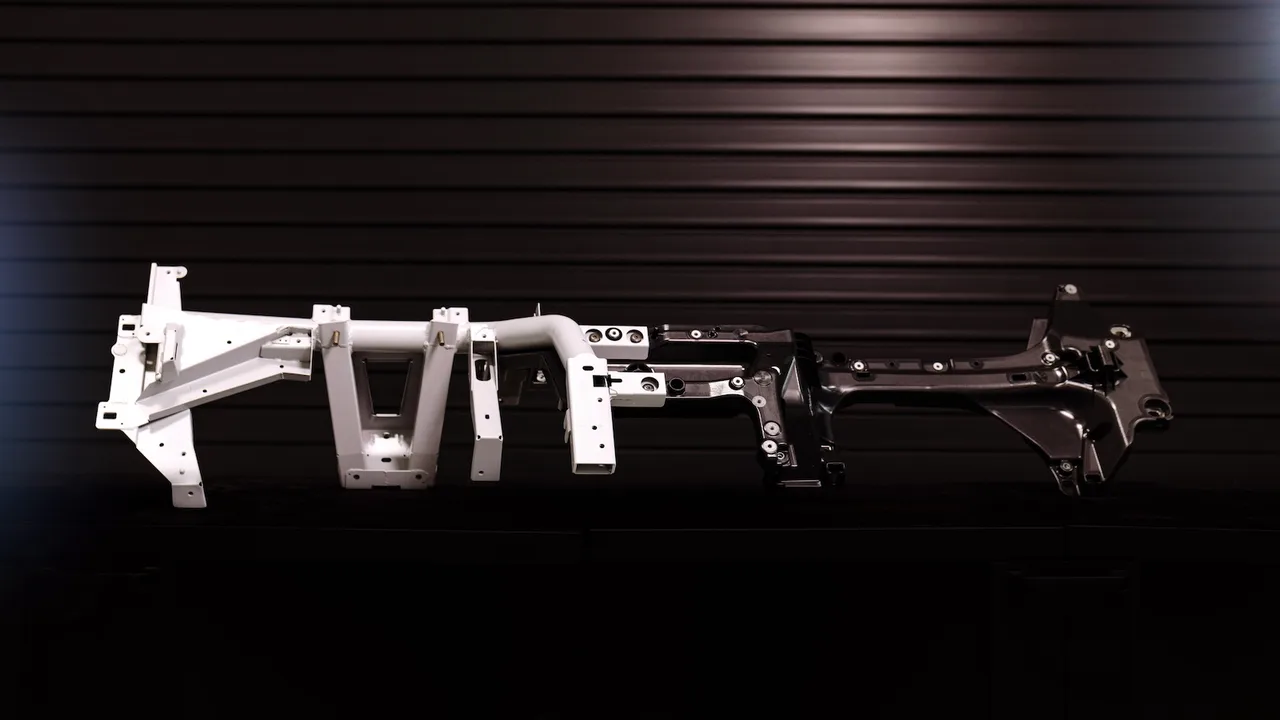
While not a JEC Innovation Award submission, the Jaguar Land Rover crosscar beam announcement (December 2025) deserves mention alongside the JEC winners as evidence of a broader industry movement toward multi-material composite integration in automotive structures [12].
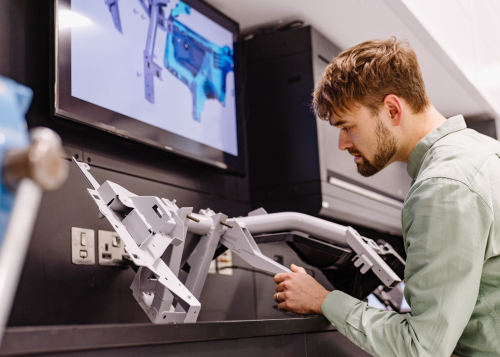
The crosscar beam — the structural backbone that spans the vehicle cabin behind the dashboard, mounting airbags, instrument clusters, and steering columns — has traditionally been manufactured from magnesium die casting or aluminum extrusions. JLR's next-generation platform replaces this component with a hybrid FRP and steel construction developed in collaboration with material suppliers Celanese, CCP Gransden, and Petford Group.
Source: JLR
The environmental impact projection is striking: based on an expected annual production volume of approximately 270,000 vehicles, the composite crosscar beam replacement is projected to cut more than 50,000 tonnes of CO2 annually compared to the equivalent magnesium component [12]. That is roughly equivalent to the annual energy use of 17,000 UK homes. The weight reduction also improves vehicle dynamics (lower dashboard mass reduces moment of inertia and improves steering feel) and contributes to range extension in JLR's electrifying vehicle lineup.
The JLR crosscar beam story illustrates a principle that runs through all three automotive composite innovations at JEC 2026 and in the recent industry news: the biggest wins are not in exotic, high-cost carbon fiber applications, but in intelligent multi-material substitution of conventional metal components that represent large mass fractions of the vehicle.
The Material Palette for Automotive Composites
The three automotive innovations covered in this article use three entirely different material systems — which is itself instructive. There is no single "right answer" for automotive composites. Material selection depends on the loading case, production volume, cost target, and sustainability priority.
| Material System | Density (g/cm³) | Specific Stiffness (E/ρ) | Specific Strength (UTS/ρ) | Production CO2e (kg/kg) | Primary Automotive Use |
|---|---|---|---|---|---|
| Carbon fiber (standard) | 1.75–1.80 | ~38–40 | ~600–700 | 24–29 | Motorsport, premium body panels |
| E-Glass fiber | 2.54–2.60 | ~11 | ~67 | 1.5–3.0 | Structural panels, battery housings |
| Flax fiber (Bcomp ampliTex) | 1.45–1.55 | ~14–16 (30% > glass) | ~60–80 (≈ glass) | 0.5–2.0 | Interior/exterior bio panels, semi-structural |
| Hemp fiber | 1.48 | ~12–14 | ~55–70 | ~0.5–1.5 | Interior trim, non-structural panels |
| Long fiber thermoplastic (LFT) glass | 1.55–1.70 | ~8–10 (filled) | ~50–70 | 1.8–3.5 | Structural housings, underbody |
| Continuous fiber organosheet (GFRP TP) | 1.80–1.90 | ~12–14 | ~60–80 | 2.0–4.0 | Battery housings, structural members |
| CFRP thermoplastic (PEEK/PPS) | 1.55–1.60 | ~55–60 | ~600–700 | 25–32 | Aerospace-to-auto; wing ribs, brackets |
Table 1: Material system comparison for automotive composite applications [13][14][15]. Note: Specific stiffness = E/ρ (Young's modulus divided by density). This is the performance-per-weight metric that governs structural efficiency. Flax's 30% advantage over glass in specific rigidity is the key number behind the BMW M3 application — the roof can achieve equivalent stiffness to a glass fiber part at lower weight.
Natural Fibers: A Maturing Platform

Source: Bcomp
Flax fiber composites in particular have made significant advances in the past five years. The key improvements:
- Moisture management: The SGL Carbon resin/prepreg innovation for the BMW M3 application demonstrates that the historical barrier to exterior automotive use — moisture-driven surface instability — can be engineered around without sacrificing environmental credentials.
- Vibration damping: Natural fiber composites offer intrinsically better vibration damping than CFRP. The cellulose microstructure dissipates energy more effectively than crystalline carbon fiber. This is a feature in automotive applications where NVH (noise, vibration, harshness) performance is a key quality metric.
- Bio-based resin compatibility: New bio-based epoxy systems (GreenPoxy from Sicomin and similar formulations) are increasingly compatible with natural fibers, enabling fully bio-based composite systems for applications where mechanical demands are moderate.
- Industrial supply chain: The EU has a mature, established supply chain for high-quality flax fiber (concentrated in northern France, Belgium, and the Netherlands), reducing the supply security and quality control concerns that historically made natural fibers less attractive to risk-averse OEM procurement.
Composite Material Property Comparison
Six-axis performance profile — higher score = better on each axis
Manufacturing for Volume: The Speed-to-Market Challenge
The most persistent barrier to composites penetrating automotive mass production has never been material performance — it has been cycle time. Steel stamping produces a door panel in seconds. Aluminum die casting produces a structural node in 2–3 minutes. Traditional composite RTM produces the same panel in 30–60 minutes. This gap has historically made composites uncompetitive for anything other than low-volume premium applications.
The processing innovations showcased at JEC 2026 — and in recent industry developments — are systematically closing this gap.
| Manufacturing Process | Typical Cycle Time | Part Complexity | Material Range | Automotive Production Volume |
|---|---|---|---|---|
| Steel stamping | 5–30 seconds | High geometry | Steel alloys | Mass production (>100,000/yr) |
| Aluminum die casting | 2–5 minutes | High complexity | Aluminum alloys | Mass production (>50,000/yr) |
| Compression molding (SMC/BMC) | 2–5 minutes | Moderate | Thermoset GF | Mass to medium volume |
| Compression molding (thermoplastic) | 2–4 minutes | Moderate-high | LFT, CFRT organosheet | Mass to medium volume |
| Wet compression molding | ~3 minutes (180 sec) | Moderate | Thermoset GF/CF | Medium volume |
| HP-RTM (High-Pressure RTM) | < 5 minutes | Complex 3D | Thermoset CF/GF | Medium volume (5,000–50,000/yr) |
| Automated RTM (BMW M3 roof) | Variable (automated) | Complex | Thermoset NF/GF | Medium production |
| Conventional RTM | 30–60 minutes | Complex | Thermoset CF/GF | Low volume (<5,000/yr) |
| AFP (Automated Fiber Placement) | Application-dependent | Very high precision | TP/TS tapes and tows | Low-medium volume; tailored structures |
Table 2: Manufacturing process cycle time and volume comparison for automotive composites [10][16].
The Compression Molding Breakthrough
The TU Chemnitz / Mahle EV battery housing specifically targets compression molding because it is the only composite process that currently achieves the combination of cycle time, part size, and material flexibility required for a large structural automotive component at production volumes.
Key developments making compression molding increasingly capable:
Organosheet Integration
Pre-consolidated continuous fiber thermoplastic sheets (organosheets) can be heated and compression-formed in single-shot operations, combining structural reinforcement with overmolded ribs and attachment points in a single tool close.
In-Mold Functionalization
Compression molding tools increasingly incorporate in-mold assembly steps — threaded inserts, sealing flanges, bushing presses — that eliminate post-molding secondary operations.
Simulation-Driven Design
Advanced process simulation (mold flow, fiber orientation prediction, weld line mapping) has matured to the point where first-time-right tooling is achievable for most compression molding applications, eliminating costly iteration cycles.
Where AFP Fits in Automotive
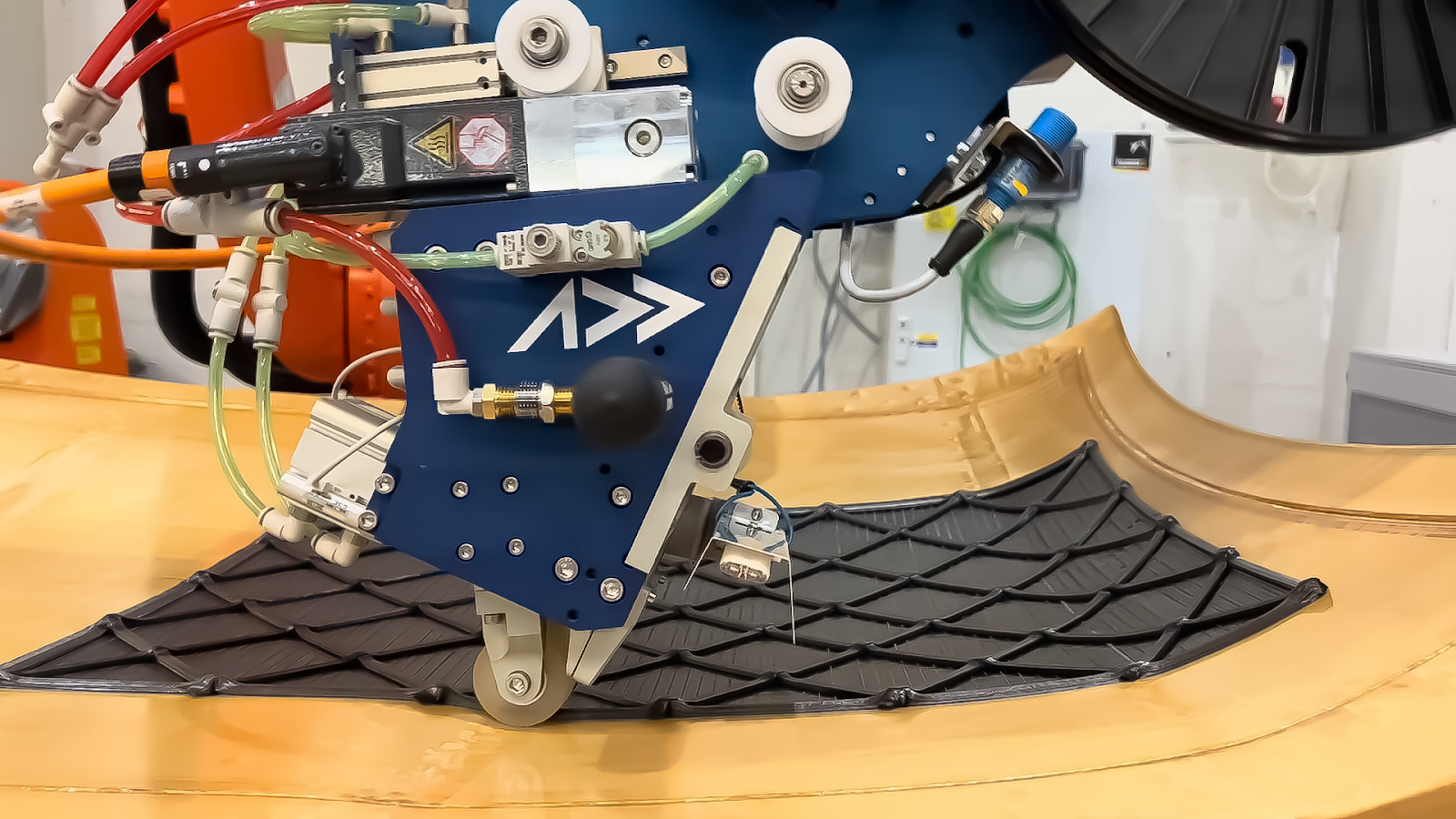
AFP-XS head laying tow on an automotive roof panel geometry
Automated Fiber Placement is not a mass-production automotive process in the sense of compression molding or HP-RTM — it does not produce parts in 2-minute cycles. Its role in automotive composites is different and increasingly important:
- Tailored reinforcement: AFP can deposit fiber precisely where structural analysis indicates load paths, eliminating the material waste inherent in over-designed chopped or woven fabric laminates.
- Complex geometry structural components: Door intrusion beams, B-pillars, seat structures, and crash management systems require fiber orientation control that AFP enables and compression molding cannot match.
- Thermoplastic processing: AFP with thermoplastic tapes (PEEK, PPS, PA12) enables in-situ consolidation of complex structural components that cannot be stamp-formed from flat organosheets.
- Prototyping and low-volume production: AFP enables automotive OEMs and Tier 1 suppliers to produce structurally validated composite components for advanced vehicle programs before committing to high-volume tooling investment.
The AFP/ATL composite market is projected to reach USD 3.1 billion by 2026, growing at a CAGR of 10.8% [17]. Automotive applications — historically the smallest segment — are growing fastest, as OEMs begin to adopt AFP-derived processes for structural programs that require the precision that RTM preforming alone cannot achieve.
Structural Complexity vs. Annual Production Volume
Manufacturing process positioning — composite vs. conventional
Conference Sessions and Live Demos
JEC World 2026 features several sessions and demonstrations directly relevant to automotive composites:
SMC BMC Design Award 2026 — "Live Better, Live Green"
The SMC BMC Alliance's annual student design competition takes on sustainability-focused themes in 2026 with its "Live Better, Live Green — SMC Solutions for Improving Quality of Life" brief. Three student finalist projects — including the Domum Shelter (TU Delft), Hedera (Elisava Barcelona), and GROWi (ESAD Oporto) — will be presented on Wednesday, March 11, 17:00–17:45, Agora 5, Hall 5 [18].
While these are design-school concepts rather than production-ready automotive solutions, the award's consistent focus on how SMC and BMC composite materials enable sustainable, functional products provides a useful window into where the next generation of composite designers is directing attention. SMC and BMC remain among the most cost-effective composite manufacturing routes for medium-to-large automotive volume components, and the Award's emphasis on sustainability in 2026 mirrors the broader market shift.
Caracol — Robotic Manufacturing for Mobility
Caracol's presentation at JEC 2026 — "Revolutionizing Composites Parts Production for Mobility with Robotic Advanced Manufacturing" — addresses the interface between large-scale robotic additive manufacturing and automotive/mobility composite production [18]. Caracol's continuous fiber robotic printing system (CFAM) enables complex, large composite parts with embedded multi-material construction that would be impractical or impossible with conventional tooled molds.
For automotive, this is particularly relevant for:
- Low-volume specialty vehicle structures
- Tooling fabrication (composite molds manufactured faster than traditional machined aluminum)
- Custom structural brackets and enclosures for motorsport and EV conversion programs
Live Demo Area
The expanded JEC Live Demo Area features Roctool's thermal fusion in-mold bonding technology — directly relevant to thermoplastic composite automotive part joining — and Thermwood's LSAM large-scale additive system for tooling manufacture. For automotive composites engineers, both systems address real production challenges: Roctool for thermoplastic component assembly without adhesives or fasteners, and LSAM for reducing tooling lead time and cost for new model introductions.
The Road Ahead
The three innovations covered in this article — BMW M's flax-fiber M3 roof, TU Chemnitz's glass fiber thermoplastic battery housing, and JLR's hybrid composite crosscar beam — share a common characteristic: they are production decisions, not research decisions. Money has been committed, tooling has been built, supply chains have been qualified. That is a fundamentally different statement from where automotive composites stood even five years ago.
Four conditions need to continue improving for composites to capture significantly more automotive market share:
Cost Parity for Mid-Range Vehicles
The BMW M3 and JLR programs target premium vehicles where cost premiums of 20–40% over aluminum are acceptable. For composites to penetrate B-segment and C-segment vehicles (global volume leaders), the cost gap must narrow further. Continued automation investment, process rationalization (fewer SKUs, higher machine utilization), and raw material cost reduction through natural fibers and recycled fiber systems are the primary levers.
Recycling Infrastructure
The composites industry's credibility on sustainability depends on having a viable end-of-life pathway. Thermoplastic composites — the basis of the battery housing and increasingly the BMW M application — offer inherent recyclability through remelting. Thermoset composites still rely on mechanical grinding (fiber property degradation) or pyrolysis (energy-intensive). Investment in chemical recycling and vitrimer-based reprocessable thermosets will be essential.
Design Confidence and Simulation Fidelity
Automotive structural engineers have decades of validated simulation tools for steel and aluminum. Composite simulation — particularly for crash behavior, fatigue, and multi-material hybrid structures — remains more computationally demanding and less universally validated. Closing this gap through improved material models and validated CAE workflows is a prerequisite for faster composite adoption in structural safety-critical applications.
Manufacturing Automation Accessibility
The single biggest constraint on composites adoption in Tier 1 and Tier 2 automotive supply chains is not technology maturity — it is access to manufacturing automation at an appropriate scale. Large aerospace AFP machines costing $1–5M are not viable for an automotive supplier producing specialized components at 5,000–20,000 units per year. The trend toward accessible, robot-agnostic AFP systems — deployable on standard industrial robots at a fraction of the traditional capital cost — is creating a new category of composite manufacturing capability that automotive supply chains can actually afford. Making AFP-class precision available to Tier 2 automotive composites suppliers at accessible capital cost is the next frontier.
Natural Fiber Composites in Automotive: 2015–2030
Key industry milestones & market trajectory
Making Automotive AFP Accessible
The automotive composites market is bifurcating. On one side: high-volume thermoplastic compression molding for structural components (battery housings, instrument panels, underbody panels). On the other: precision fiber placement for tailored structural reinforcement in safety-critical and high-performance applications.
The compression molding side of this bifurcation is well-served by the major machine builders. The AFP/precision placement side has historically been the preserve of aerospace — with capital costs and operational complexity that most automotive Tier 1 and Tier 2 suppliers cannot justify.
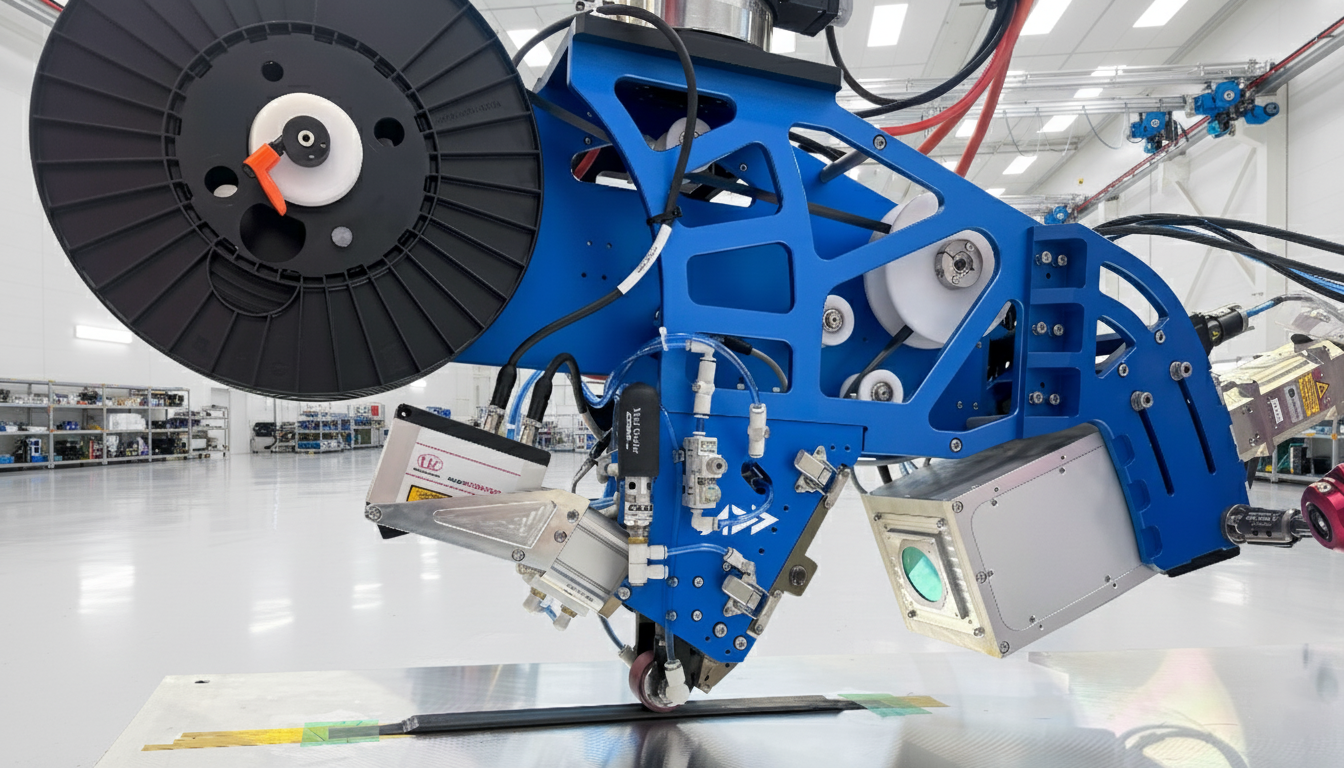
Addcomposites' approach — AFP head units that mount on standard industrial robots, with software-driven path planning (AddPath) and subscription-based access models — makes the precision placement side of this bifurcation accessible to automotive suppliers who could never justify a $2M stand-alone AFP gantry for a 10,000-unit/year structural component program.
The next-generation automotive innovations on display at JEC 2026 and in the surrounding industry news are not making their breakthroughs with exotic $5M machines. They are making them with automated processes — RTM, compression molding, robotic manufacturing — that are accessible, flexible, and increasingly affordable. That is the direction automotive composites manufacturing is heading, and it is one that small and medium composites manufacturers can participate in now.
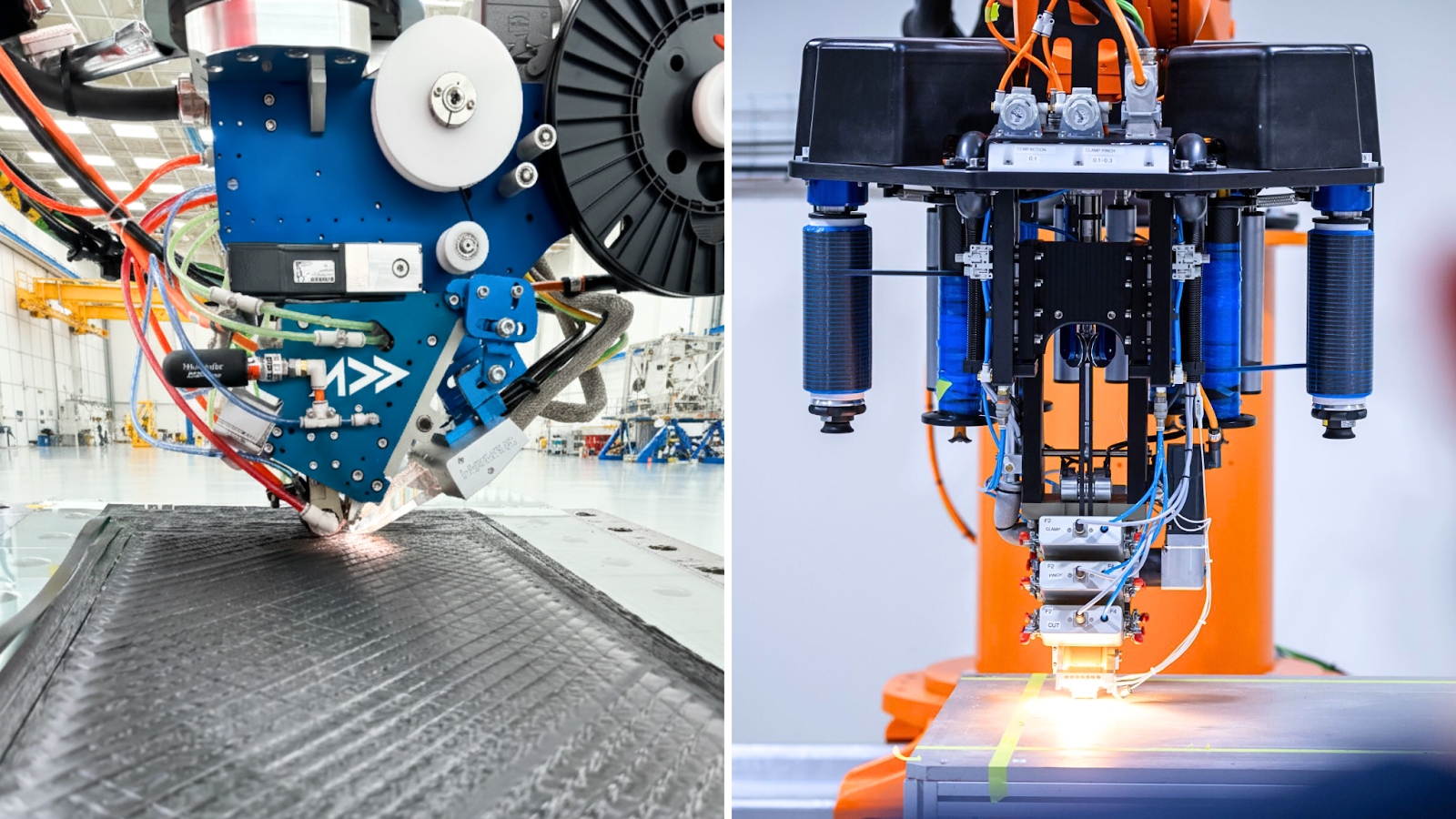
AFP-XS (left) and AFP-X (right) — scalable automated fiber placement from research to production, the manufacturing automation layer that makes precision composite structures accessible beyond aerospace.
References
- [1] Allied Market Research, "Automotive Composites Market to Reach USD 14.7 Billion by 2033," PR Newswire, February 2026. Available: prnewswire.com
- [2] CompositesWorld, "Composites end markets: Automotive (2025)," 2025. Available: compositesworld.com
- [3] Fortune Business Insights, "Automotive Composites Market Size," 2025. Available: fortunebusinessinsights.com
- [4] Bcomp Ltd., "Bcomp and BMW Group Win World's Most Prestigious Composites Award for Series Production Exterior Automotive Parts," January 2026. Available: bcomp.com
- [5] BMW Group / SGL Carbon, "SGL Carbon and BMW Group receive JEC Innovation Award for Natural Fiber Composites Project," January 2026. Available: sglcarbon.com
- [6] BMW Group press release, "BMW Group receives prestigious innovation award for components made from flax fibres," January 2026. Available: press.bmwgroup.com
- [7] BMW Group, "Ready for series production: BMW Group achieves major breakthrough with utilization of natural fiber composites," 2025. Available: press.bmwgroup.com
- [8] emobility-engineering.com, "Lightweight EV Battery Enclosures: Aluminium, Steel, Composites." Available: emobility-engineering.com
- [9] EVEngineering Online, "How is lightweighting affecting EV component design?" Available: evengineeringonline.com
- [10] CompositesWorld, "HP-RTM on the rise," and "Wet compression molding." Available: compositesworld.com
- [11] CompositesWorld, "Top 11 winners of JEC Composites Innovation Awards 2026," January 2026. Available: compositesworld.com
- [12] CompositesWorld, "JLR hybrid composite dashboard beam cuts 50,000 tons of CO2, rethinks vehicle safety," December 2025. Available: compositesworld.com
- [13] Easy Composites, "Natural Flax Fibre Reinforcement in Composites." Available: easycomposites.co.uk
- [14] T. Rajeshwari et al., "Enhancement of Mechanical Properties of Flax-Epoxy Composite with Carbon Fibre Hybridisation for Lightweight Applications," PMC/Polymers, 2020. Available: pmc.ncbi.nlm.nih.gov
- [15] Arris Composites, "White Paper: High-Performance Natural Fiber Composites (Flax)." Available: arriscomposites.com
- [16] CompositesWorld, "The rise of HP-RTM." Available: compositesworld.com
- [17] Stratview Research / OpenPR, "AFP/ATL Composites Market to Reach USD 3.1 Billion by 2026," 2021. Available: openpr.com
- [18] SMC BMC Alliance, "SMC BMC Design Award 2026 — Live Better, Live Green." Available: smcbmc-europe.org; JEC World program, Caracol presentation. Available: jec-world.events
- [19] JEC Group, "JEC Innovation Awards 2026: discover the 11 winners!" January 2026. Available: jeccomposites.com
- [20] Bcomp, "World's First: Bcomp and BMW Group Will Bring Visual High-Performance Natural Fibre Composites to Exterior Parts of Production Road Cars." Available: bcomp.com
This article is part of Addcomposites' JEC World 2026 Preview Series — ten technical deep-dives covering the innovations, trends, and technologies shaping the composites industry at the world's premier composites event (Paris, March 10–12, 2026). Previous articles in the series cover the JEC World 2026 overview, thermoplastic composites, startup innovations, sustainability, digital manufacturing, and hydrogen composite pressure vessels.
Addcomposites provides AFP and filament winding solutions on standard industrial robots, making aerospace-grade automated composite manufacturing accessible to research institutions, SMEs, and production facilities worldwide.
Learn More
Have questions about implementing automated fiber placement for your automotive composite programs?
Contact Us for a Consultation